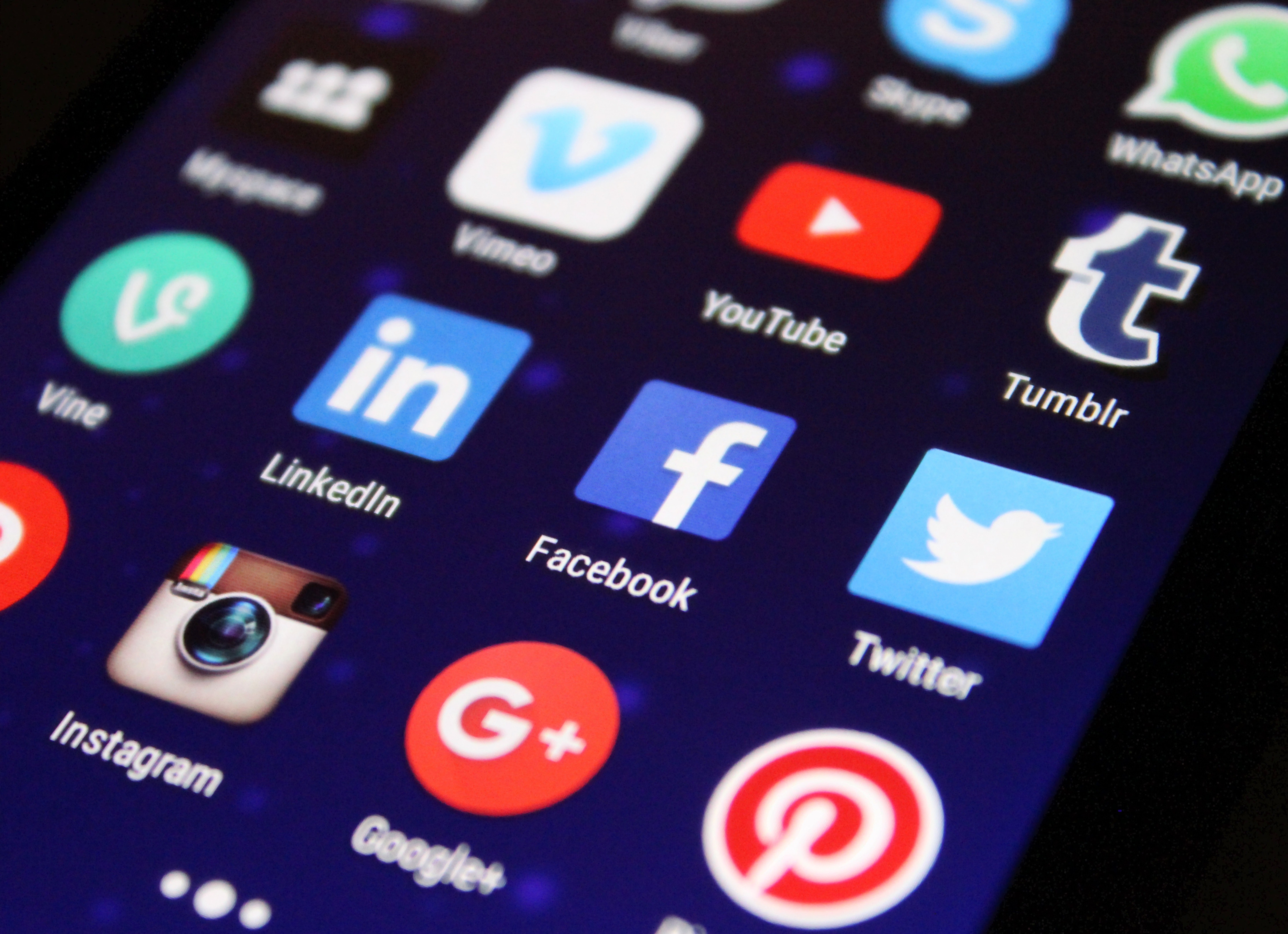
People aren’t just using social media to have fun, but also to make purchasing decisions!
Mostly of the social media users tend to search about a company or a product before buying it, not only are people purchasing from businesses on social media, but they prefer to buy from companies that are active on social media!
Plus, consumers who have had a positive experience with a brand on social media are likely to recommend the brand to someone. The famous mouth to mouth.
| Social Media | Best for |
|---|---|
| All businesses in order to gain visibility and engage with new and existing customers – It’s good for B2B and B2C business but it’s more affective for B2C with no doubt. | |
| Businesses that are targeting a largely tech-savvy audience with bite-sized information. I recommend to B2B and B2C business, works great for both. | |
| Especially B2B businesses | |
| B2C businesses that are interested in publishing visually engaging and story-driven content in video and photos. Example: clothing brand, beauty products, restaurants. | |
| YouTube | B2B and B2C businesses whose product or service lends itself to informational videos or visual appeal |
| Google My Business | All physical business should have as it makes easier to find your location |
| Yelp | Businesses that would benefit from positive online reviews and higher search results in Google |
| Consumer-focused brands marketing to females and wanting to share information in an aesthetic way | |
| Snapchat | Brands with a largely millennial audience whose messaging skews spontaneous and fun |
| Tumblr | Combines both social networking and microblogging. Tumblr can be a great place to share thoughts and creativity with like-minded users. |
Here we’re going to show the best social media platforms for business to help business owners decide which is going to be the most suitable for their interests.
Facebook is the most widely used social platform. Whether your business goal is brand awareness, website traffic, lead generation, or online conversions, Facebook should (and more than likely will) make a notable difference in reaching your goals when used properly.
You may be thinking, “Okay, so my target audience is on Facebook, but how do I make sure they see my business page?” The answer is Facebook advertising (and a lot of great content!).
On Facebook, you can target by age, gender, employment, interests, purchasing behaviors, relationship status and so much more! This gives you the power to target your exact audience and put your ads and content in their newsfeed where they are already scrolling.
If you’re wondering if Facebook is for you; our answer 9 times out 10 is yes. There are only 2 instances when we may suggest another platform over Facebook: the first being if you do not have a social media advertising budget, and the second being if your type of business is prohibited to advertise on Facebook based on Facebook’s ad policies (i.e. a vaping or tobacco company etc.).
Instagram
Instagram comes very close behind Facebook and is number three on our list of social media sites for business. Instagram is owned by the same person who owns Facebook, and has 500 million daily active users.
Instagram is owned by Facebook, it has access to the same extensive user base and advertising platform just like the Facebook Messenger app does.
So Instagram has all of the same paid benefits of Facebook, but Instagram also has its own set of organic benefits.
When we use the term “organic,” we mean functions you can perform or results you can achieve without directly paying for them in advertising dollars.
On Facebook, you have to pay for advertising campaigns to grow your followers and increase the reach of your page and posts. On Instagram, you can grow your followers organically and therefore grow the reach of your profile and posts organically as well!
This makes Instagram a great option for both businesses with and without an advertising budget.
Pinterest
If your business falls within a creative industry of any kind or caters more so to females, then Pinterest is a social media platform you want to be on.
Pinterest has 175 million monthly active users. Out of those users, 81% are women, 93% of active pinners said they use Pinterest to plan for purchases and 87% said they’ve purchased something because of Pinterest.
Food recipes, lifestyle how-to articles, wedding inspiration, and outfit ideas are some of the top searches on Pinterest. So if you’re business falls within any of those industries, you need to be utilizing Pinterest as one of your social media sites for business.
Additionally, Pinterest has some organic capabilities that other social platforms do not. Organic reach on a Pinterest post is determined by the amount of keywords in a post and if they align with what a user has searched on Pinterest.
This gives businesses a chance to strategically plan their content to contain words that are searched a lot on Pinterest, without having to use extra advertising dollars!
Twitter
Twitter is one of the older social media platforms, and it has 330 million monthly active Twitter users. You can post photos and videos along with character-limited copy, but Twitter is most known for its feed of real-time updates. Is the term “live-tweeting” ringing a bell now?
Twitter is also great for engaging new potential customers through its use of hashtags. Similar to Instagram, you can search a hashtag and find other posts from consumers and businesses alike that have used that hashtag.
This means that you can find consumers searching for something that your company offers and vice versa!
For example, if you’re a car wash company, you can literally find people tweeting about how they need to get their car washed depending on how they’ve used hashtags in their tweet. You can then tweet them with a discount for your car wash, and wa-la, you’ve most likely got a new customer.
LinkedIn
If your business follows a B2B model, or targets consumers based on job titles, then LinkedIn can be a powerful tool for you!
LinkedIn has 250 million monthly active users, most all of which are in the working world or close to it.
Because LinkedIn is considered to be a social media platform for business, people often include more accurate information about their employers, job positions, work email addresses and more than they do on other social media platforms that are utilized more for personal use.
Google Plus
Google Plus, like YouTube, is another social media platform that is owned by Google. Unlike all of the other social media sites for business on this list, Google Plus can play a role in boosting your SEO rankings organically on Google.
Posting on Google Plus regularly will not only expose your company to its 395 million monthly active users, but is also helps Google get smarter at knowing what your website is about, and what it should rank for on Google!
YouTube
YouTube is a video platform that allows users to watch videos and/or upload them.
YouTube has 1.57 billion monthly active users, giving your business the chance to share company content wither over 30+ million daily active users who are likely to watch it.
Similar to Instagram, Pinterest, and Snapchat, YouTube has the benefit of visual content, but unlike the other social media sites for business that we’ve listed so far, it has the unique stance of being owned by Google!
Because of this, YouTube has access to Google’s advertising platform, and you can use this to your advantage when running YouTube ads.
It also mimics its parent company in that you can optimize the search of your company’s YouTube videos with the proper keywords.
Without having to spend extra money on advertising dollars, you can make your YouTube videos have higher search rankings by including the searched keywords in your title, video description, and actual list of keywords in the keywords tool.
Google My Business
Google My Business (GMB) is Google’s business directory, which allows your business to appear on Google maps, show up in local queries and receive ratings and recommendations. It is the world’s largest business directory, which makes it essential for every local business with a physical location to claim their listing and establish a presence.
First, create a GMB listing, which lets customers find your address, company information and ratings in the “local pack” of the search results. Once you claim your location, your customers can find you online, rate you, recommend you and identify features about your business that compel them to visit you.
It’s very important to fill out every possible bit of information — from store hours to prices to photos. The more information you provide, the better presence your business will have. Businesses with a GMB account will always outrank any business that lacks a GMB account due to the “local pack” search engine results page. For more information, check out our detailed article on Google My Business.
In today’s marketing environment, you should be using social media for business. The best social media for business depends on the nature of your business but, at a minimum, you should create accounts on Facebook, LinkedIn, Twitter and Instagram. Local establishments should also create a listing on Google My Business and Yelp.
Final considerations, you don’t need to be on all the social media mentioned above but you should put efforts on the ones you have choosen. Now that you know how each social media channel works, pick the ones that are more suitable for your business and post creative contents for your audience “language”.
 Joice Koga